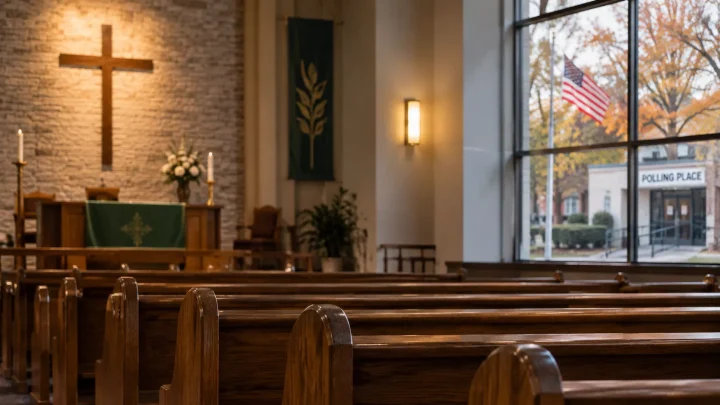
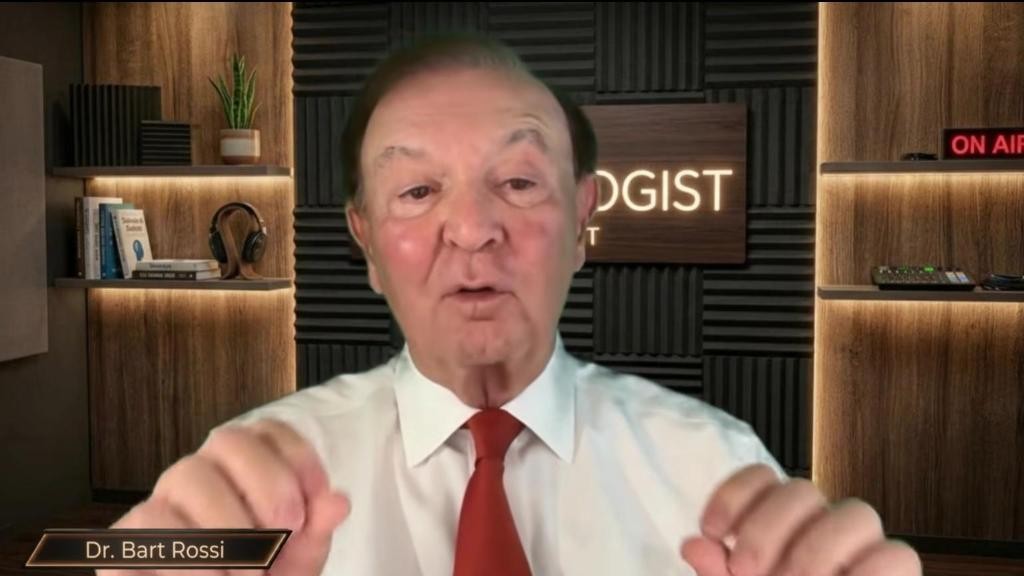
In brief: In Episode 6 of The Psychologist, Dr. Bart Rossi takes on religion in America, and in particular what he calls “toxic Christianity”: white Christian nationalism, congregations built around bias, and a push to bring one faith into public schools. He argues that the founders separated church and state for good reason, credits young Americans who are walking away from organized religion, and asks whether religion can still unite the country. Watch the episode below, followed by the context behind his arguments.
What does Dr. Rossi mean by “toxic Christianity”?
He uses the term for a specific strain of belief, not for Christianity as a whole. In his description, it is religion that has become biased, prejudiced and in some cases racist, held together by shallow thinking and loyalty to a single pastor. At its core is white Christian nationalism: congregations that want a white Christian nation and want everyone who looks or worships differently pushed to the side.
What troubles him most is that the people involved are not quiet about it. They are proud of it, he says, and they are organized. They are active politically and socially, and whole communities have formed around the idea. His point is that this can no longer be dismissed as a fringe.
The survey data puts a number on it. PRRI’s 2025 American Values Atlas, based on more than 22,000 interviews, found that about 11% of Americans qualify as Christian nationalism adherents and another 21% as sympathizers. The same research found that nearly two-thirds of Americans are skeptics or rejecters of the idea.
Why would anyone build a congregation this way?
This is where the psychologist in him comes through. Dr. Rossi argues that pushing bias works, at least for the people doing the pushing. A pastor who gives like-minded people a group to belong to, and someone to be against, gains a following. With the following comes power, identity and a sense of purpose, for the leader and for the members.
That, he says, is why these congregations keep spreading. People who share a bias seek each other out, and the church gives them permission to feel good about it. He calls the result a perversion of religion, and he sees politicians giving these leaders a nod in exchange for their support as part of what keeps it going.
What does he say about church and state?
Dr. Rossi believes the founders got this right. If religion comes into public schools, he asks, whose religion? Whose prayers? Catholic, Jewish, Muslim, Mormon? Or only white Christian nationalist prayers? A government that picks one faith to promote, he argues, opens the door to every group that wants to dominate the others, and the founders saw that coming.
He is equally clear about the other side of it. He supports everyone’s right to belong to a religious organization of their choosing. His objection is to one group using public institutions to push its views everywhere, at all times, and coming back for more each time it gets a little.
For readers who want the legal background: the constitutional footing is the First Amendment, which bars Congress from making any law “respecting an establishment of religion.” The phrase “separation of church and state” itself comes from Thomas Jefferson’s 1802 letter to the Danbury Baptists, and the Supreme Court has relied on it for decades in reading that clause.
The fight he describes is live. In April 2026, the full Fifth Circuit Court of Appeals ruled 9–8 that Texas can require the Ten Commandments in every public school classroom, setting aside a lower-court injunction. Louisiana has a similar law, and the families challenging the Texas mandate said they expected to take it to the U.S. Supreme Court.
Why are young Americans walking away from religion?
Here Dr. Rossi gives younger people credit. Many of them, he says, look at organized religion, see institutions chasing power and money and pushing prejudice, and decide they want no part of it. They choose to be unaffiliated. They keep their own view of God and faith without joining a group that wants to promote itself and its view of the world.
The numbers support the generational gap. Pew Research Center’s 2023–24 Religious Landscape Study found that 62% of U.S. adults identify as Christian and about 29% as religiously unaffiliated. Among the youngest adults, only 46% identify as Christian, compared with 80% of the oldest, and the youngest are about three times as likely to be unaffiliated. Pew also found the overall decline has leveled off since 2019, which fits Dr. Rossi’s observation that some young people are moving toward religion too, toward congregations focused on community and being a good neighbor.
Who decides who counts as a real Christian?
Dr. Rossi points to this year’s U.S. Senate race in Texas. James Talarico, a former teacher who earned a Master of Divinity from Austin Presbyterian Theological Seminary, ran as a leader for everyone and spoke against Christian nationalism. In Dr. Rossi’s account, the other side cast him as not truly Christian and held up Ken Paxton as the real believer.
To Dr. Rossi, that reversal says a great deal: the candidate with the theology degree and a message of inclusion was the one labeled a non-Christian. Talarico went on to defeat Paxton on November 3, becoming the first Democrat elected to the Senate from Texas in decades.
Can religion still unite the country?
Not right now, in his view. He sees religious groups moving toward the extremes, each claiming to be the one true faith and calling the others names or cults, much as Protestants and Catholics did for generations in Ireland. He does not see much that unites people in that.
He is not without hope. Dr. Rossi sees a movement of religious organizations that are trying to be positive and thoughtful and to serve all citizens, and he hopes they keep growing. That is the new approach he believes the country needs.
Sunshine and showers
The sunshine went to the religiously unaffiliated, the “nones.” Not because belonging to a faith is wrong, Dr. Rossi says, but because they are making people rethink what religion ought to be, and independent thinking about faith is healthy. His advice to everyone else: join any group you like, as long as it does not slide into extremism.
The showers, which he upgraded to torrential rain, went to white Christian nationalists, for wanting a country of white Christians only. That such a conversation is still necessary, he says, is hard to believe.
Related commentary
- Religion in America: Why the Faithful Stayed Home
- The Psychology and Politics of Extremism
- The Psychologist, Episode 5: Affordability Is About More Than Prices
Sources
- Mapping Christian Nationalism Across the 50 States – PRRI
- Decline of Christianity in the U.S. Has Slowed, May Have Leveled Off – Pew Research Center
- Appeals court rules Texas can require public schools to display Ten Commandments in class – PBS NewsHour / AP
- Talarico vows a politics of love in speech after historic Senate win – KSAT
- Talarico advances for Democrats in Texas Senate race – KUT
- The Psychologist Podcast, Episode 6: Religion – YouTube