A psychologist looks at the rise, and quiet retreat, of evangelical support for Donald Trump
For ten years, one picture summed up Donald Trump’s political base: a circle of pastors with their hands on his shoulders, heads bowed, praying over him. The first time it went viral was in July 2017, when a group of evangelical leaders, including Southern Baptist pastors Jack Graham, Ronnie Floyd, and Robert Jeffress, laid hands on the President as he prayed in the Oval Office. The scene happened again this year. One week into the war with Iran, the White House released images of the President at the Resolute Desk, eyes closed, while clergy placed their hands on his shoulders and back.
The laying on of hands is not a casual gesture. Many believers hold that it passes spiritual power to the person receiving the prayer. Doing it for the cameras was a public statement of loyalty. That makes the November 3 midterms all the more striking.
Who they were
The bloc was mostly white, Protestant, older, and concentrated in the South and rural Midwest. It was also strikingly loyal. In 2016, Trump won 81 percent of the white evangelical vote, more than George W. Bush, Mitt Romney, or John McCain. He kept that support level through four years in office, two impeachments, and a 2024 comeback. As recently as October, Reuters/Ipsos found white evangelicals were still the only major demographic group where his support was above 60 percent.
Why they were drawn to him
Calling it hypocrisy and stopping there is too simple. Many evangelicals described their vote as a transaction, not a love affair. One Christianity Today analysis described the 81 percent as strategic, issue-oriented voters rather than enthusiastic supporters of Trump himself. Their list of goals was long: Supreme Court appointments, ending Roe v. Wade, religious liberty, and a deep fear of what the other side would do with power. On their own terms, they got much of what they asked for. Roe was overturned in 2022.
Psychology adds something the policy list leaves out: threat. Many evangelicals had come to see themselves as a besieged minority in a culture moving away from them. People who feel under siege don’t look for a saint. They look for a fighter. Trump presented himself as exactly that, and many accepted him as their protector.
Why they looked past what he said and did
This is the hard question. The thrice-married candidate with the Access Hollywood tape was hard to square with the “values voter” tradition of the 1990s. His bond with white evangelicals survived a decade of scandals and investigations, including dozens of sexual misconduct allegations, which he denies, and a hush-money case involving a porn star.
Psychologists call the discomfort of holding two conflicting beliefs cognitive dissonance. People seldom resolve it by abandoning a public commitment. More often they find a story that makes the conflict go away. Evangelical leaders supplied two:
- The “imperfect vessel.” God has always worked through flawed men like David, Samson, and Peter. A sinful leader can still do God’s work.
- The “King Cyrus” story. Cyrus was the pagan Persian king who freed the Jews from exile. He wasn’t a believer, but God used him anyway. Several evangelical leaders relied on this argument whenever questions about Trump’s character came up, a real historical departure for evangelicals.
Both stories did the same psychological job. They removed the leader’s behavior from moral judgment. Once Trump was seen as God’s instrument, criticizing him could feel like criticizing God’s plan. Every attack from outsiders then confirmed the sense of siege and drew the circle tighter.
The cracks
Loyalty like that doesn’t usually break all at once. It wears down, and 2026 is when it wore down.
The war with Iran began at the end of February. In a June Reuters/Ipsos poll, 54 percent of evangelicals said Trump’s use of the military in Iran did not fit their understanding of Christianity, while 41 percent said it did. Gas prices rose sharply. In April, the President posted an AI-generated image of himself as a Christ-like healer, and for the first time many of his own supporters objected publicly. Evangelical and Catholic allies called the image blasphemous in a rare public break from a base that had largely stood by him. He removed the post, but he did not apologize.
By the fall, the trend was clear. Pew found Trump’s approval among white evangelical Protestants had fallen to 58 percent, down 20 points from 78 percent shortly after his second inauguration. In January, only 40 percent were very or extremely confident that he acts ethically, down from 55 percent a year earlier.
The dam breaks, quietly
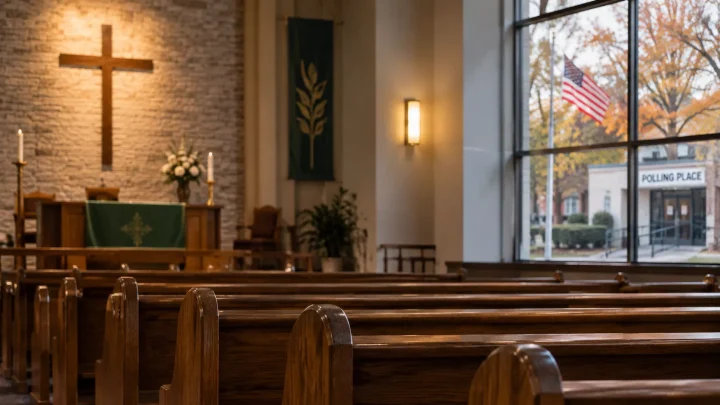
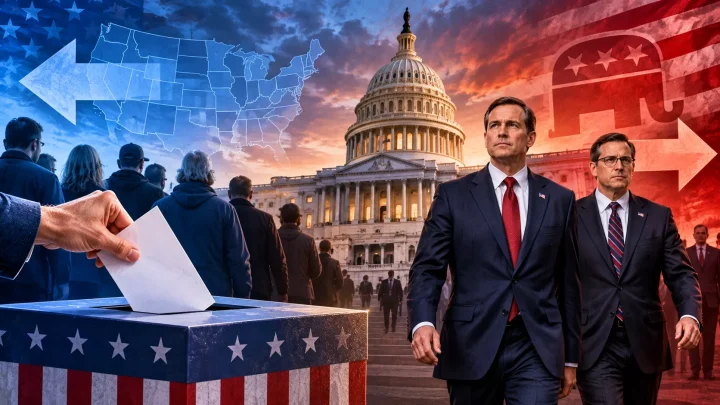
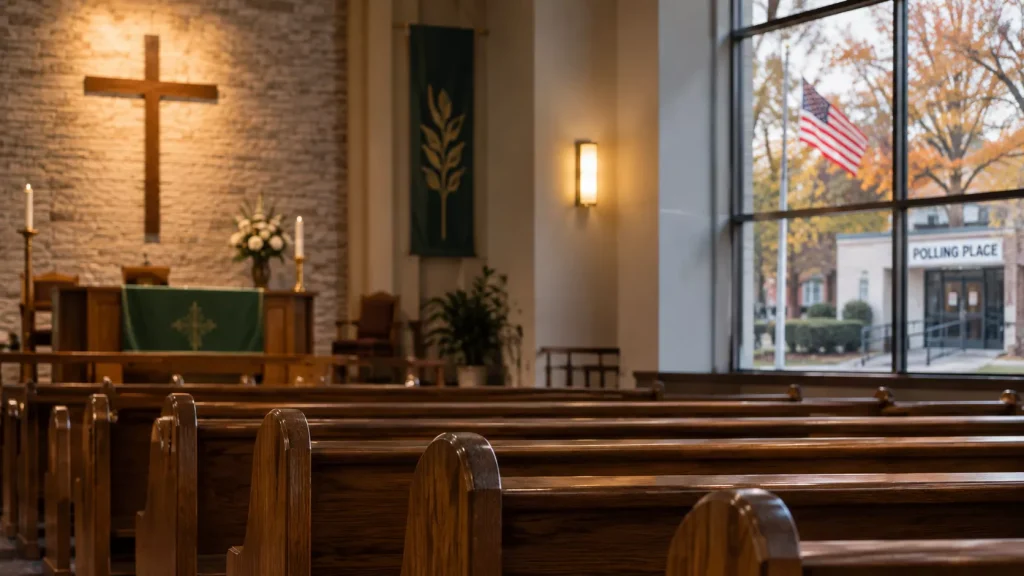
Then the midterms came, and the faithful did not show up. White evangelicals made up 17 percent of voters, down from 23 percent in 2024 and 24 percent in 2022. Their loyalty to Republicans barely moved: 82 percent backed GOP House candidates. In 343 heavily evangelical counties in states with Senate races, turnout was only 66 percent of 2024 levels, compared with 78 percent in nearby counties. Trump had carried those counties by 62 points in 2024. Republican Senate candidates won them by 45.
This is the psychologically telling part. Evangelicals did not vote for the other side. Disillusioned people seldom turn on their own group. They withdraw. The economist Albert Hirschman described three responses to a failing institution: exit, voice, and loyalty. For years evangelicals chose loyalty. Voice, meaning open criticism, was costly within their communities. Voting Democratic was unthinkable. So they chose a quiet exit. They stayed home in large numbers.
What was the final straw?
Pinning it to one event would be too neat. The leaders closest to the movement point to the wallet. Ralph Reed said evangelical voters were telling him about the cost of living and gas prices, along with real fear of the other side. I suspect the economy gave people a reason to stay home, and the image of the President as Christ gave them permission. For years the bargain rested on a single condition: Trump could be a flawed vessel as long as he stayed a vessel. When he appeared to cast himself in the role of the Savior, he broke the story that had held the dissonance in check.
What comes next
Not everyone sees a turning point. Eric Metaxas argued that people blaming Trump for the losses should be ashamed. Franklin Graham defended the President over the image, and Robert Jeffress is still a supporter. Some scholars think the cost will be long-term. Evangelical historian John Fea asked how the movement could critique a future president’s ethics after a dozen years so closely tied to Trump, and predicted recovery could take a generation.
The hands are still on his shoulders. In November, though, far fewer of the people they claimed to represent voted.