In brief: Most of President Trump’s core supporters still stand by him, but the coalition that elected him in 2024 is fraying. Republican approval has fallen from 89% to 75% since April 2025, and strong approval among his 2024 voters has dropped from 53% to 35%. Psychology helps explain both the loyalty and the erosion: belief anchored in identity is extraordinarily durable, while belief anchored in promised results is not.
Why do supporters believe him over the evidence?
For ten years, a recurring pattern has played out. Something happens in public view, documented by video, records or the president’s own words. Mr. Trump says it didn’t happen, or that it is “fake news” or a “hoax,” and a large share of his supporters accept his account. The underlying message: don’t believe your eyes and ears; believe me.
Several well-studied psychological processes make that possible.
Identity-protective thinking. When a political figure becomes part of who we are, an attack on him feels like an attack on us. Research on motivated reasoning shows that people evaluate evidence differently when their group identity is at stake, accepting weak evidence that protects the group and rejecting strong evidence that threatens it. Supporters are not ignoring facts; they are filtering them through loyalty.
Cognitive dissonance. In the 1950s, psychologist Leon Festinger studied a group that predicted the end of the world. When the date passed, many members did not abandon their belief; they became more committed. Admitting a mistake that has cost us socially and emotionally is painful, so the mind often looks for ways to keep the belief instead. Every time a supporter has defended Mr. Trump to a friend or relative, the cost of changing their mind goes up.
Source over substance. Trust in the messenger often matters more than the message. Mr. Trump has spent years telling supporters that the media, courts and experts are against them. Once those sources are discredited in advance, contrary evidence arrives already labeled as an attack.
Repetition. Statements repeated often enough begin to feel true, a well-documented effect. Mr. Trump’s style of repeating the same phrases, rally after rally, is unusually effective at building that familiarity.
Strongman or authoritarian? Belief becomes the reality
As far back as 2016, this site described Mr. Trump as “an authoritarian, the guy in charge, the boss.” A decade later, by any reasonable measure, he governs as an authoritarian, or at the very least leans hard in that direction. He has issued mass pardons to allies, directed federal agencies against his critics, tried to federalize the National Guard over a governor’s objection until the Supreme Court stopped him, spent millions in public money on ads promoting himself, and floated sending immigration agents to “surround the polls.” The political scientists surveyed by Bright Line Watch rated American democracy at 53 out of 100 in April 2025, the lowest score since they began measuring in 2017, down from 67 before his inauguration.
Many of his supporters see something entirely different: not an authoritarian, but a strong, fearless and patriotic leader willing to fight for them. In a PRRI survey this May, 59% of Americans described Mr. Trump as “a dangerous dictator whose power should be limited,” while 38% called him “a strong leader who should be given the power he needs to restore America’s greatness.” Among Republicans, 78% chose “strong leader.”
That gap is the heart of the psychology. Mr. Trump projects strength, and for people who feel the country has been weak, chaotic or stacked against them, strength is exactly what they are looking for. The same action, defying a court or punishing a critic, is read by one group as an abuse of power and by the other as proof that he will not back down. His words and actions may point one way, but for his supporters, the belief is the reality.
The promises, and Lucy’s football
Every fall in the old Peanuts comic strip, Lucy holds a football and promises Charlie Brown that this time she won’t pull it away. Every time, he runs to kick it, she yanks it away, and he lands flat on his back. The joke is not about Lucy. It is about Charlie Brown’s hope, which is stronger than his memory.
Supporters have run at a few of those footballs. In his first term, Mr. Trump repeatedly promised a health care plan to replace the Affordable Care Act that never arrived. In 2024 he promised that “starting on day one” he would end inflation and bring prices down, said he could end the war in Ukraine within 24 hours, signaled he would release the Epstein files, and campaigned against “new wars.” In office, prices and gas costs remain voters’ top complaint; the Russia-Ukraine war continues; the president called the Epstein files a “hoax” before reversing himself under pressure from his own party; and the U.S. has carried out military strikes in at least eight countries, including a seven-month war with Iran.
Hope is a powerful psychological force, especially when the alternative is admitting that the person you trusted misled you. That is why the football works for so long. But it does not work forever.
How are the 2016, 2024 and 2026 supporters different?
2016: the movement. Mr. Trump’s first coalition was built on identity and grievance: voters who felt the establishment had left them behind and saw him as their voice. For many, support was less about specific policies than about who he was fighting. In 2019, in Trump Follower Psychology 101, Dr. Bart Rossi, PhD, was asked when the base would finally move away from Mr. Trump. His answer: “they won’t.” Supporters, he wrote, “have envisioned in Trump someone who thinks and feels as they do, and he alone is on their side, despite any evidence to the contrary.” For the core of the movement, that has held for seven years, which is exactly why the erosion now happening at the edges is worth watching.
2024: the coalition of results. In 2024, Mr. Trump added voters who had not been part of the movement: independents, younger voters, more Black and Latino working-class voters, many of them motivated chiefly by prices. They were not buying an identity; they were buying a promise.
2026: the sorting. That difference explains what is happening now. A University of Massachusetts Amherst survey found that 84% of 2024 Trump voters would vote for him again, but remorse is concentrated among the newer arrivals: 31% of independents and about 30% of moderates and Black voters who backed him say they would not. Among Trump voters unhappy with his handling of the Iran war, 49% would not vote for him again. People who signed up for results leave when the results do not come. People who signed up for an identity mostly stay.
What does a pattern of being wrong do to people?
Being let down repeatedly does not usually produce a dramatic change of heart. More often it produces quiet withdrawal: less enthusiasm, less defending, less certainty, and sometimes staying home on Election Day. The polling shows exactly that. Overall Republican approval is still high, but strong approval, the intensity that powers volunteers and turnout, has fallen sharply. In a midterm decided by who shows up, that may matter more than defections.
There is also a cost to the supporter. Holding a belief against mounting evidence takes energy and can strain relationships with family and friends. Many people eventually resolve that tension not by renouncing their former choice but by drifting away from politics altogether.
Benefits and drawbacks
For Mr. Trump, a base that believes him over the evidence has been an extraordinary asset; it has carried him through impeachments, indictments and scandals that would have ended other careers. For his supporters, loyalty offers belonging, meaning and a sense of being heard.
The drawback is that unconditional trust is only as durable as the promises it rests on. A leader who asks people to disbelieve their eyes is betting that their loyalty will outlast their experience. For the core, it may. For the voters who joined in 2024 to see their grocery bills fall, the football has been pulled away too many times.
Related commentary
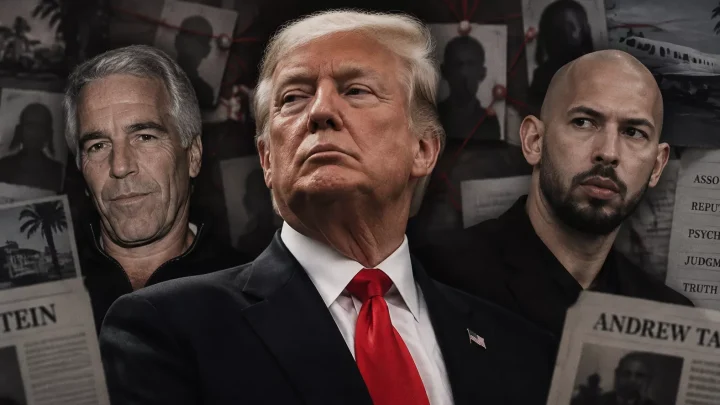
- Guilt by Association: Epstein, the Tate Brothers and Trust
- Who Are the Trump for President Followers? (2015)
- The Impact of Fake News (2016)
Sources
- Forbes — Trump approval among Republicans down 14 points since April 2025 (Aug. 31, 2026)
- Strength In Numbers/Verasight — Trump approval at 33% as Republicans sour (Sept. 2026)
- Fortune — Trump voter remorse concentrated among swing voters (May 16, 2026)
- Al Jazeera — How Trump shifted on releasing the Epstein files
- Nexstar — Where has Trump conducted military strikes during his second term?
- Silver Bulletin — Iran war polling
- Newsweek — PRRI poll: “dangerous dictator” vs. “strong leader” (May 2026)
- Bright Line Watch — expert ratings of U.S. democracy (July 2026)